Nordic travellers to Rome (Room 14)
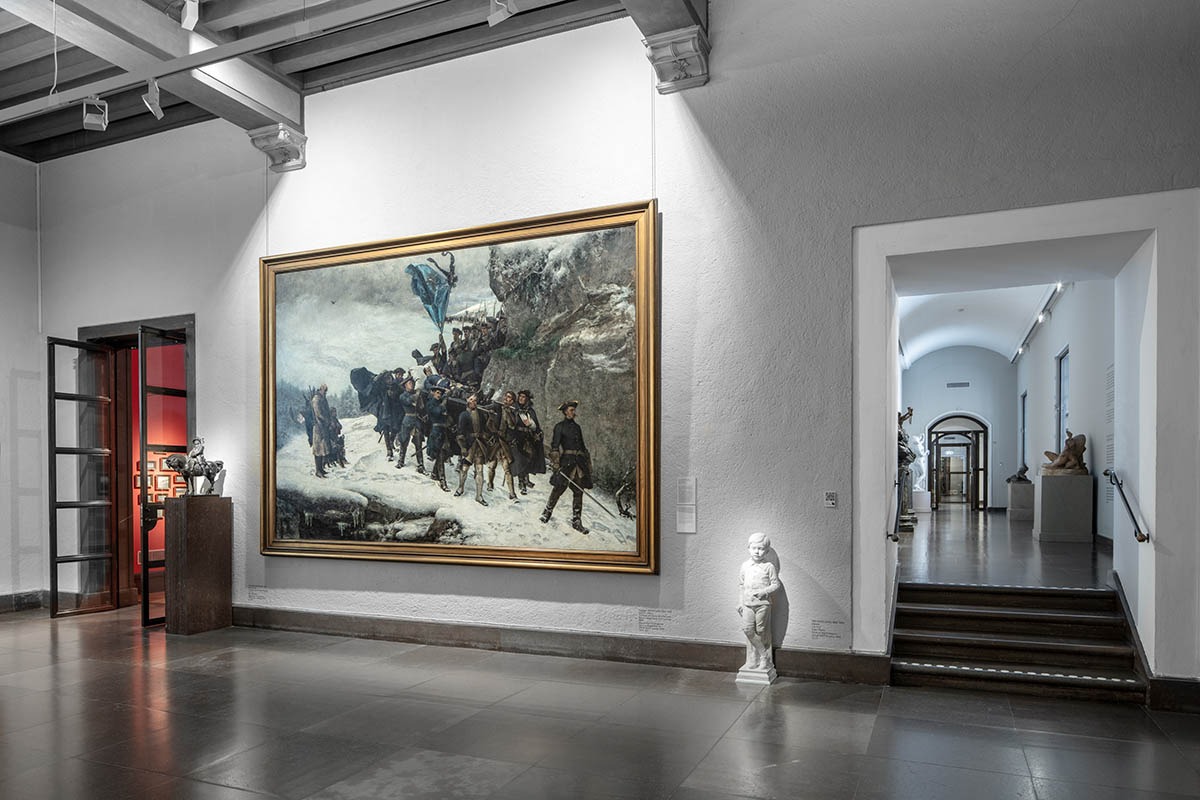
The early 19th century marked a renewed interest in the classical art of antiquity, during the period usually known as neoclassicism. The culture and art of classical antiquity was considered the fountainhead of European culture and became a model for the artists of the time.
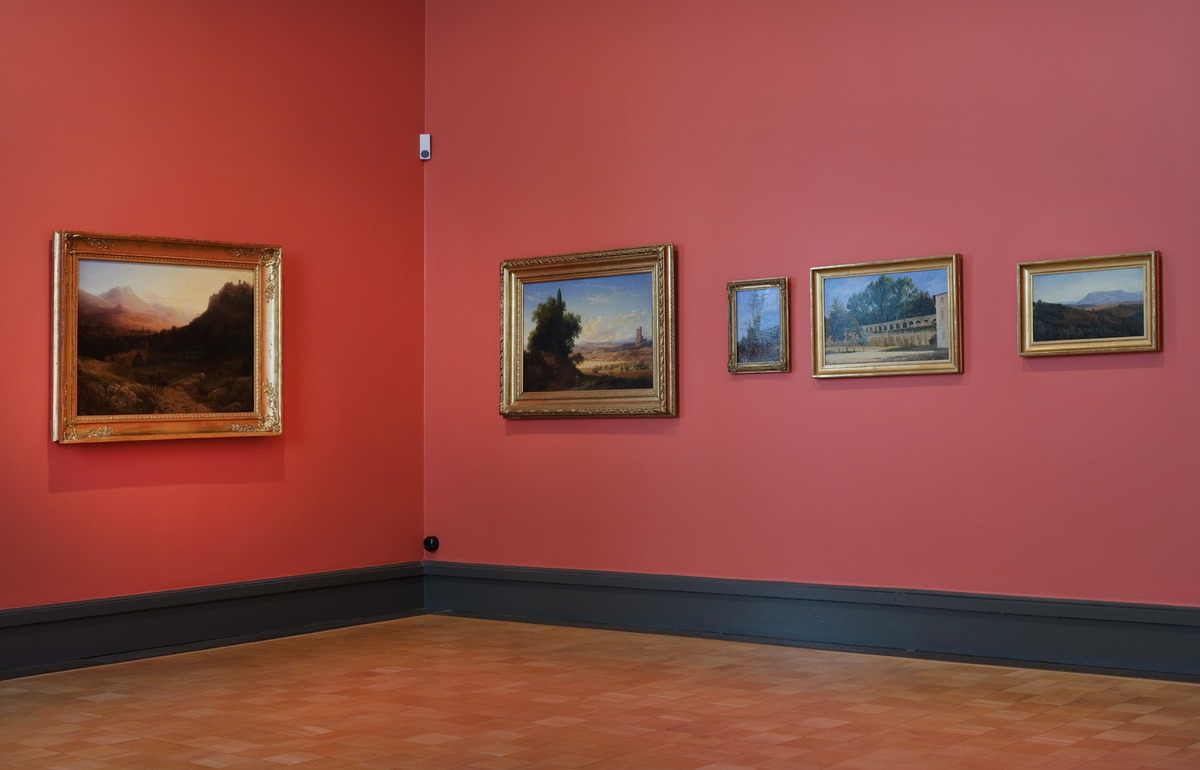
For students at the art academies, a a longer sojourn abroad was an important final part of their training. In the first half of the 19th century, the Nordic artists preferably travelled to Rome and Italy. They were expected to carry out grand compositions based on the classical monuments, but they were also interested in the Italian landscape.
Several of the works shown in this presentation provide examples of depictions of the Italian landscape and studies of details in it, occasionally including ruins from antiquity in the subject matter.
The portraits reflect new ideals that came to the fore in fashion. The men’s costumes were inspired by the uniforms of the Napoleonic era, while the women wore simple dresses, in thin fabric, without a corset. Ideally, a dress was so long that it became creased around the legs – like a tunic on a sculpture from antiquity.