Gothenburg Colourism (II) (Room 25)
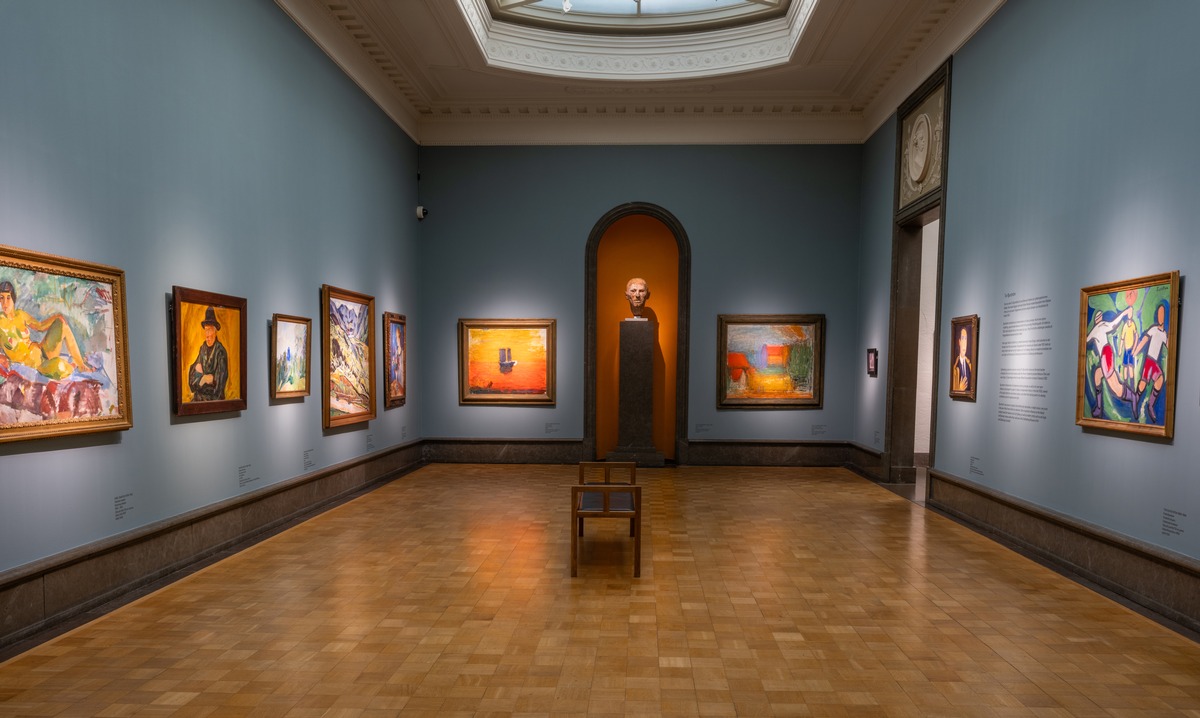
This room features works by the predecessors and role models of the later Gothenburg colourists. Their inspiration came from two main sources: a strong tradition of colour rich painting along the Scandinavian West Coast—from Copenhagen to Oslo—and new impulses from abroad.
Gothenburg colourism has no exact parallel in Swedish art, though it shares affinities with Danish and Norwegian art from the period. The artist Karl Isakson, who lived most of his life in Denmark, played an important mediating role. Danish art includes many colourists, and Bornholm and Christiansö became key meeting places that also attracted painters from Gothenburg. Among Norwegian artists, Edvard Munch, Ludvig Karsten and Henrik Sørensen were significant influences. Munch was regarded as an ideal, while Karsten was the most radical in his use of colour.
The Gothenburg colourists were also shaped by several artists who left the Stockholm-based group “The Young” and settled on the West Coast—among them Tor Bjurström, Gösta Sandels and Birger Simonsson. All had lived in Paris and brought with them experiences from the emerging modernist movements.